
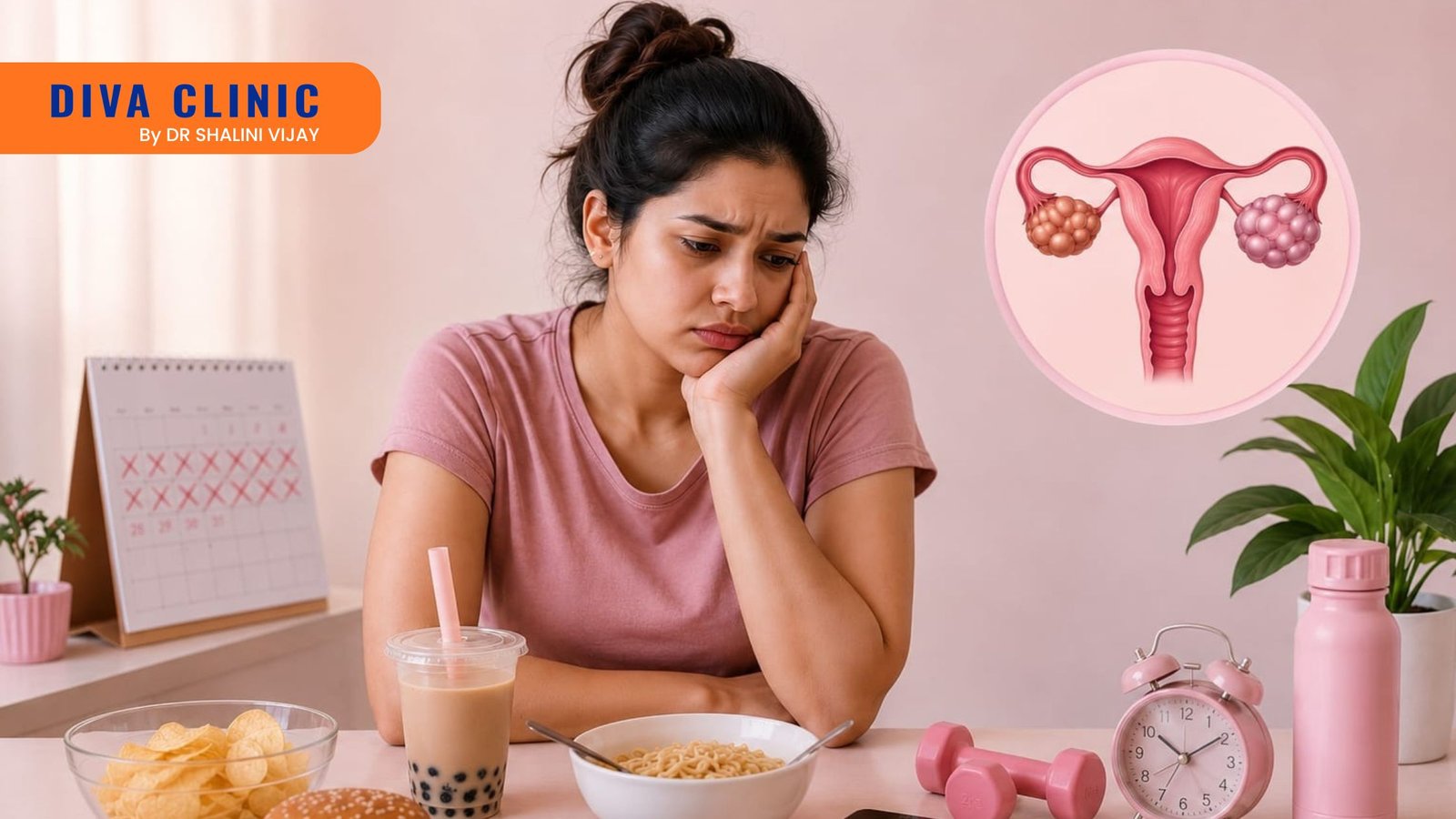
Polycystic Ovary Syndrome (PCOS) is one of the most common hormonal disorders affecting women of reproductive age. Yet despite increasing awareness, many women continue to struggle with symptoms for years without understanding what may be making their condition worse.
Irregular periods, weight gain, acne, hair fall, excessive facial hair, mood changes, and fertility challenges are some of the most common symptoms associated with PCOS. While medical treatment plays an important role in management, everyday lifestyle habits can significantly influence how severe these symptoms become.
What many women don’t realize is that small habits repeated daily can gradually affect hormone balance, insulin levels, metabolism, and reproductive health. In some cases, these habits may worsen PCOS symptoms even when a woman is actively trying to improve her health.
At Diva Clinic, Undri Pune, Dr. Shalini Vijay helps women understand that successful PCOS management is not only about medication. It is also about identifying daily lifestyle patterns that may be silently contributing to hormonal imbalance.
If you have PCOS or suspect you may have it, here are some common mistakes you should stop making today.
Understanding PCOS: More Than Just Irregular Periods
PCOS is a complex hormonal and metabolic condition that affects multiple systems within the body.
Women with PCOS may experience:
- Irregular or absent periods
- Difficulty conceiving
- Weight gain
- Acne
- Hair fall
- Excess facial or body hair
- Mood fluctuations
- Insulin resistance
- Fatigue
Because PCOS affects hormone regulation and metabolism, everyday lifestyle choices can have a powerful impact on symptom management.
The good news is that positive changes often produce meaningful improvements over time.
Mistake #1: Skipping Breakfast
Many women trying to lose weight believe skipping breakfast will help them consume fewer calories throughout the day.
However, skipping breakfast may actually create challenges for women with PCOS.
When the body goes long periods without food, it may contribute to:
- Increased hunger later in the day
- Blood sugar fluctuations
- Energy crashes
- Overeating at later meals
- Increased cravings for sugary foods
Women with PCOS often benefit from balanced meals that support stable blood sugar levels throughout the day.
A nutritious breakfast containing protein, fiber, and healthy fats may help improve satiety and support metabolic health.
Mistake #2: Eating Too Much Processed Food
Modern diets often contain large amounts of processed foods that may negatively impact hormonal health.
Common examples include:
- Sugary beverages
- Packaged snacks
- Fast food
- Refined carbohydrates
- Excess sweets
- Highly processed convenience foods
Many women with PCOS also experience insulin resistance, which can make the body more sensitive to blood sugar spikes.
Frequent consumption of processed foods may contribute to:
- Increased insulin levels
- Weight gain
- Inflammation
- Hormonal imbalance
- Worsening PCOS symptoms
Choosing whole foods such as vegetables, fruits, lean proteins, legumes, nuts, and whole grains can help support healthier hormone function.
Mistake #3: Living a Sedentary Lifestyle
Physical activity plays an important role in PCOS management.
Unfortunately, long hours spent sitting at a desk, working from home, studying, or using electronic devices can contribute to a sedentary lifestyle.
Lack of physical activity may increase:
- Weight gain
- Insulin resistance
- Fatigue
- Metabolic dysfunction
- Hormonal imbalance
Regular movement helps the body use insulin more effectively and supports overall health.
Even simple activities such as:
- Walking
- Cycling
- Swimming
- Yoga
- Strength training
can positively influence PCOS symptoms when performed consistently.
Many women notice improvements in energy levels, mood, and weight management after incorporating regular exercise into their routine.
Mistake #4: Poor Sleep Habits
Sleep is one of the most overlooked aspects of hormonal health.
Many women regularly stay up late scrolling on their phones, watching television, working, or managing household responsibilities.
Poor sleep may affect:
- Hormone production
- Appetite regulation
- Insulin sensitivity
- Stress levels
- Weight management
Insufficient sleep may also increase cravings for high-calorie foods and contribute to fatigue, making healthy lifestyle choices more difficult.
Most adults benefit from approximately 7 to 9 hours of quality sleep each night.
Developing consistent sleep habits can support better hormonal balance and overall wellness.
Mistake #5: Ignoring Stress
Stress affects far more than emotional wellbeing.
When stress levels remain elevated for long periods, the body produces higher levels of stress hormones, which can influence reproductive hormones as well.
Chronic stress may contribute to:
- Irregular menstrual cycles
- Ovulation disturbances
- Sleep problems
- Increased appetite
- Mood changes
- Worsening hormonal imbalance
Many women underestimate the connection between emotional health and reproductive health.
Stress management strategies may include:
- Yoga
- Meditation
- Deep breathing exercises
- Walking outdoors
- Journaling
- Adequate sleep
- Professional counseling when needed
Supporting emotional wellbeing is an important part of comprehensive PCOS care.
Mistake #6: Self-Medicating Based on Internet Advice
The internet provides access to a vast amount of health information, but not all advice is appropriate for every individual.
Many women begin taking supplements, herbal remedies, or hormonal medications without professional guidance.
This approach may lead to:
- Delayed diagnosis
- Inappropriate treatment
- Unnecessary side effects
- Missed underlying health conditions
PCOS affects every woman differently.
Factors that influence treatment decisions include:
- Age
- Symptoms
- Weight
- Fertility goals
- Hormonal profile
- Medical history
A personalized treatment plan is often far more effective than generic online recommendations.
Mistake #7: Ignoring Symptoms for Too Long
One of the biggest mistakes women make is assuming symptoms are normal.
Many women live with:
- Irregular periods
- Acne
- Hair fall
- Weight gain
- Facial hair growth
for years before seeking medical help.
Unfortunately, untreated PCOS may increase the risk of:
- Fertility difficulties
- Metabolic disorders
- Insulin resistance
- Type 2 diabetes
- Pregnancy complications
- Long-term hormonal imbalance
Early diagnosis often allows symptoms to be managed more effectively.
Can PCOS Be Managed Successfully?
Absolutely.
While there is currently no single cure for PCOS, many women successfully manage symptoms and lead healthy, active lives.
Effective management often involves a combination of:
Healthy Nutrition
A balanced diet can support hormone regulation and improve metabolic health.
Regular Exercise
Physical activity helps improve insulin sensitivity and supports weight management.
Good Sleep
Quality sleep contributes to hormonal balance and overall wellbeing.
Stress Management
Reducing chronic stress can positively influence reproductive and metabolic health.
Medical Guidance
Professional evaluation helps identify underlying concerns and create a personalized treatment strategy.
When Should You See a Gynecologist for PCOS?
Consider consulting a gynecologist if you experience:
- Irregular or absent periods
- Sudden weight gain
- Excess facial hair growth
- Persistent acne
- Hair thinning or excessive hair fall
- Difficulty conceiving
- Symptoms affecting daily life
- Family history of PCOS
Early intervention can help reduce complications and improve long-term reproductive health.
Expert PCOS Care at Diva Clinic, Undri Pune
At Diva Clinic, Undri Pune, Dr. Shalini Vijay provides comprehensive evaluation and management for women experiencing PCOS and hormonal health concerns.
Services include:
- PCOS Diagnosis & Treatment
- Hormonal Health Assessment
- Menstrual Disorder Management
- Weight Management Guidance
- Fertility Consultation
- Ovulation Support
- Pregnancy Planning Consultation
- Women’s Wellness Care
Every treatment plan is tailored to the individual’s health needs and future goals.
Why Choose Dr. Shalini Vijay for PCOS Treatment in Undri Pune?
Women from Undri, Mohammed Wadi, NIBM Road, Kondhwa, Pisoli, Wanowrie, Hadapsar, and nearby areas of Pune trust Dr. Shalini Vijay for expert women’s healthcare and PCOS management.
Patients choose Diva Clinic because of:
- Personalized treatment plans
- Expertise in PCOS and hormonal disorders
- Comprehensive fertility guidance
- Modern gynecology consultation
- Compassionate patient-centered care
- Long-term women’s health support
Final Thoughts
Sometimes the biggest obstacle in managing PCOS is not a major medical issue—it is the small habits repeated every single day.
Skipping meals, eating processed foods, poor sleep, lack of exercise, chronic stress, and ignoring symptoms can gradually worsen hormonal imbalance and make PCOS more difficult to manage.
The encouraging news is that even small positive lifestyle changes can create meaningful improvements over time.
Your hormones respond to what you do consistently—not occasionally.
If you are experiencing symptoms of PCOS, early diagnosis and personalized care can help you take control of your health and improve your quality of life.
At Diva Clinic, Undri Pune, Dr. Shalini Vijay – PCOS Specialist, Gynecologist & Women’s Health Expert in Undri Pune is committed to helping women understand their hormones, manage PCOS effectively, and achieve better long-term health.
Book Your PCOS Consultation Today
If you are struggling with irregular periods, acne, hair fall, weight gain, fertility concerns, or symptoms of hormonal imbalance, schedule a consultation with Dr. Shalini Vijay, PCOS Specialist in Undri Pune, and begin your journey toward better hormonal health and wellbeing.