
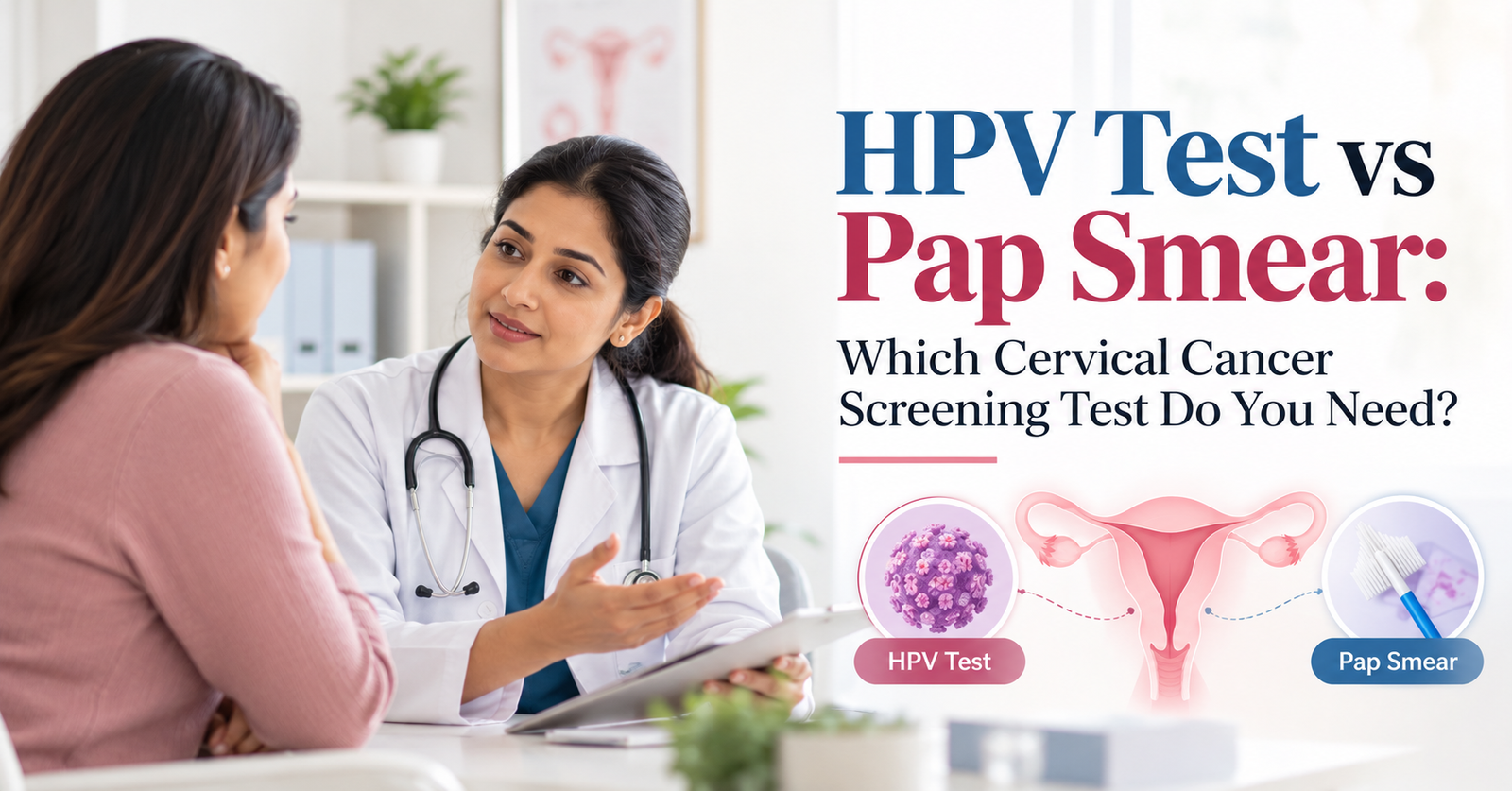
By Dr. Shalini Vijay | Gynecologist in Undri, Pune | DIVA Clinic
Cervical cancer is one of the major health concerns affecting women, but the good news is that it is also one of the most preventable cancers through appropriate screening, HPV vaccination, and timely treatment of precancerous changes.
Many women have heard about the Pap smear test and the HPV test, but often feel confused about the difference between them. Are both tests necessary? Which one is more accurate? And at what age should you start cervical cancer screening?
Understanding these tests can help you make informed decisions about your reproductive health.
If you are looking for guidance on cervical cancer screening in Undri, Pune, Dr. Shalini Vijay at DIVA Clinic can help you understand which screening approach is appropriate for your age, medical history, and individual risk factors.
What Is Cervical Cancer Screening?
Cervical cancer screening is a preventive health examination that helps identify high-risk HPV infections or abnormal cervical cells before cervical cancer develops.
The cervix is the lower part of the uterus that connects to the vagina. Most cervical cancers are caused by persistent infection with certain high-risk types of Human Papillomavirus (HPV).
One important fact every woman should know is that early cervical changes often do not cause noticeable symptoms.
This means you may feel completely healthy and still benefit from routine screening.
Regular cervical cancer screening can help identify changes early, when appropriate monitoring or treatment can prevent many cases of cervical cancer.
What Is a Pap Smear Test?
A Pap smear, also known as a Pap test or cervical cytology, is a screening procedure used to detect abnormal cells on the cervix.
During the test, a gynecologist or trained healthcare professional gently collects a small sample of cervical cells using a soft brush or sampling device.
The sample is then examined in a laboratory for abnormal cellular changes.
What Can a Pap Smear Detect?
A Pap smear may identify:
- Abnormal cervical cells
- Precancerous cellular changes
- Changes that may require further investigation
- Some changes associated with HPV infection
A Pap smear does not directly test for HPV infection. Instead, it looks for changes in cervical cells that may be associated with HPV or other causes.
Is a Pap Smear Painful?
Most women experience only mild discomfort or pressure during the procedure.
The sample collection usually takes just a few minutes, although the overall appointment may take longer.
Some women may experience light spotting afterward, which generally settles quickly.
What Is an HPV Test?
An HPV test checks for the presence of high-risk types of Human Papillomavirus associated with cervical cancer.
HPV is a common virus that can spread through intimate skin-to-skin sexual contact.
Most HPV infections clear naturally, but persistent infection with certain high-risk types may lead to abnormal cervical changes over time.
What Does an HPV Test Detect?
An HPV screening test may identify:
- High-risk HPV infection
- HPV types associated with increased cervical cancer risk
- In some tests, specific high-risk types such as HPV 16 and HPV 18
Unlike a Pap smear, which examines cervical cell changes, an HPV test identifies the presence of the virus that causes most cervical cancers.
A positive HPV test does not mean that you have cervical cancer. It indicates that further assessment or follow-up may be needed.
HPV Test vs Pap Smear: What Is the Difference?
Although both tests are used for cervical cancer screening, they work differently.
| Feature | Pap Smear | HPV Test |
|---|---|---|
| Main purpose | Detects abnormal cervical cells | Detects high-risk HPV infection |
| What it identifies | Cellular changes | Presence of high-risk HPV |
| Sample collection | Cervical cell sample | Cervical or validated vaginal sample |
| Screening role | Detects precancerous changes | Identifies infection associated with future risk |
| Screening interval | Often every 3 years in cytology-based programmes | Often every 5–10 years under WHO population-screening guidance |
| Follow-up | Based on cell abnormalities | Based on HPV result, type, and risk |
Both tests are useful, but HPV DNA testing is preferred as the primary cervical cancer screening method in current WHO guidance.
However, Pap smears remain an important screening option where HPV testing is unavailable or when recommended for individual clinical circumstances.
Which Test Is Better: HPV Test or Pap Smear?
For routine cervical cancer screening, HPV DNA testing generally provides greater sensitivity for identifying women at risk of cervical precancer.
This is because persistent high-risk HPV infection is responsible for the vast majority of cervical cancers.
A Pap smear identifies abnormal cervical cells, while an HPV test can identify high-risk infection before significant cellular changes develop.
However, this does not mean that every woman needs an HPV test alone.
Your gynecologist may recommend:
1. Primary HPV Testing
An HPV test is used as the main screening method.
2. Pap Smear Testing
A Pap smear is used to identify abnormal cervical cells.
3. Co-Testing
Both an HPV test and Pap smear are performed, when clinically appropriate under the screening approach being followed.
The right option depends on your age, screening history, risk factors, test availability, and applicable guidelines.
At What Age Should Women Start Cervical Cancer Screening?
According to WHO population-screening guidance, regular HPV DNA screening is recommended from age 30 for women in the general population, with intervals of approximately 5–10 years following negative results.
For women living with HIV, WHO recommends starting screening earlier, at age 25, with shorter screening intervals.
However, cervical cancer screening recommendations can differ between healthcare systems and individual patients.
Women with previous abnormal screening results, precancerous cervical changes, immunosuppression, or other risk factors may need a different screening schedule.
If you are unsure when to begin screening, consult a gynecologist rather than relying on a single age recommendation.
Can You Need Cervical Cancer Screening Without Symptoms?
Yes.
One of the biggest misconceptions about cervical cancer is that screening is only necessary when symptoms appear.
Early precancerous cervical changes often do not cause symptoms.
This is why cervical cancer screening is recommended as preventive healthcare rather than only as a response to illness.
However, certain symptoms should never be ignored, including:
- Bleeding after sexual intercourse
- Bleeding between menstrual periods
- Bleeding after menopause
- Persistent unusual vaginal discharge
- Unexplained pelvic pain
These symptoms do not necessarily mean cervical cancer, but they require appropriate medical evaluation.
A routine screening test alone is not a substitute for investigating concerning symptoms.
What Happens If Your HPV Test Is Positive?
Receiving a positive HPV test result can feel worrying, but it is important to understand that HPV positive does not mean cancer positive.
HPV infections are common, and many clear without causing serious health problems.
Depending on your test result, age, previous screening history, and the HPV type detected, your gynecologist may recommend:
- Repeat HPV testing after an appropriate interval
- Pap smear or other additional testing
- HPV genotyping
- Colposcopy to examine the cervix more closely
- Biopsy when clinically indicated
Not every positive HPV test requires immediate treatment.
Following your gynecologist’s recommended monitoring plan is important for identifying persistent infections or cervical changes that need further care.
Do You Still Need a Pap Smear or HPV Test After HPV Vaccination?
Yes.
HPV vaccination is an effective preventive measure against several HPV types associated with cervical cancer.
However, vaccination does not protect against every cancer-causing HPV type.
Therefore, women who have received the HPV vaccine should still follow recommended cervical cancer screening guidelines.
HPV vaccination and cervical cancer screening work together to reduce cervical cancer risk.
How Should You Prepare for a Pap Smear or HPV Test?
A few simple steps can help make your screening appointment more comfortable and support sample quality.
- Schedule your appointment when you are not experiencing heavy menstrual bleeding, if possible.
- Follow your clinic’s instructions about avoiding vaginal medicines, douching, or intercourse before testing.
- Inform your gynecologist about pregnancy, unusual bleeding, or previous abnormal test results.
- Bring previous Pap smear or HPV test reports if available.
- Discuss any anxiety or discomfort before the examination.
Most screening procedures are quick, and you can usually return to your normal daily activities afterward.
Why Regular Cervical Cancer Screening Matters
Cervical cancer often develops gradually following persistent infection with high-risk HPV.
Screening creates an opportunity to detect infection or precancerous changes before invasive cancer develops.
Appropriate screening can help:
- Identify women at increased risk
- Detect precancerous cervical changes
- Guide timely follow-up and treatment
- Reduce the risk of cervical cancer
- Support long-term reproductive and gynecological health
Prevention is especially important because many early cervical changes develop without warning signs.
Consult Dr. Shalini Vijay for Cervical Cancer Screening in Undri, Pune
Whether you are considering your first Pap smear, have questions about HPV testing, or need guidance following an abnormal screening result, speaking with a qualified gynecologist is an important step.
Dr. Shalini Vijay at DIVA Clinic, Undri, Pune, provides gynecological consultations for women’s reproductive and preventive health concerns.
If you are searching for a gynecologist in Undri, Pune, to discuss a Pap smear, HPV testing, or cervical cancer screening, schedule a consultation to understand your screening options.
DIVA Clinic
Dr. Shalini Vijay
Gynecologist | Undri, Pune
Your health deserves attention before symptoms appear. Make preventive gynecological care a priority.
Frequently Asked Questions (FAQs)
1. Is an HPV test better than a Pap smear?
HPV DNA testing is generally more sensitive for detecting high-risk infection associated with cervical precancer and is preferred for primary screening under WHO guidance. Pap smears remain useful in appropriate screening programmes.
2. Can a Pap smear detect HPV?
A Pap smear may identify cellular changes associated with HPV infection, but it does not directly detect the virus. An HPV test is needed to identify high-risk HPV infection.
3. Can I have HPV even if my Pap smear is normal?
Yes. You may have a high-risk HPV infection without abnormal cervical cells. This is one reason HPV testing is valuable for cervical cancer screening.
4. How often should I get a Pap smear or HPV test?
Screening intervals depend on your age, medical history, test results, and the screening guidelines being followed. WHO recommends HPV DNA screening every 5–10 years for average-risk women starting at age 30, while cytology-based programmes may use a three-year interval.
5. Is cervical cancer screening necessary after menopause?
Yes, some women still need cervical cancer screening after menopause. Your screening history, age, and previous results help determine when screening can safely stop.
6. Where can I consult a gynecologist for a Pap smear or HPV test in Undri, Pune?
You can consult Dr. Shalini Vijay at DIVA Clinic, Undri, Pune, to discuss cervical cancer screening, Pap smear testing, HPV testing, and appropriate preventive care.
Medical Disclaimer: This blog is for educational purposes only and should not replace professional medical advice. Screening recommendations should be individualized by a qualified healthcare professional.