
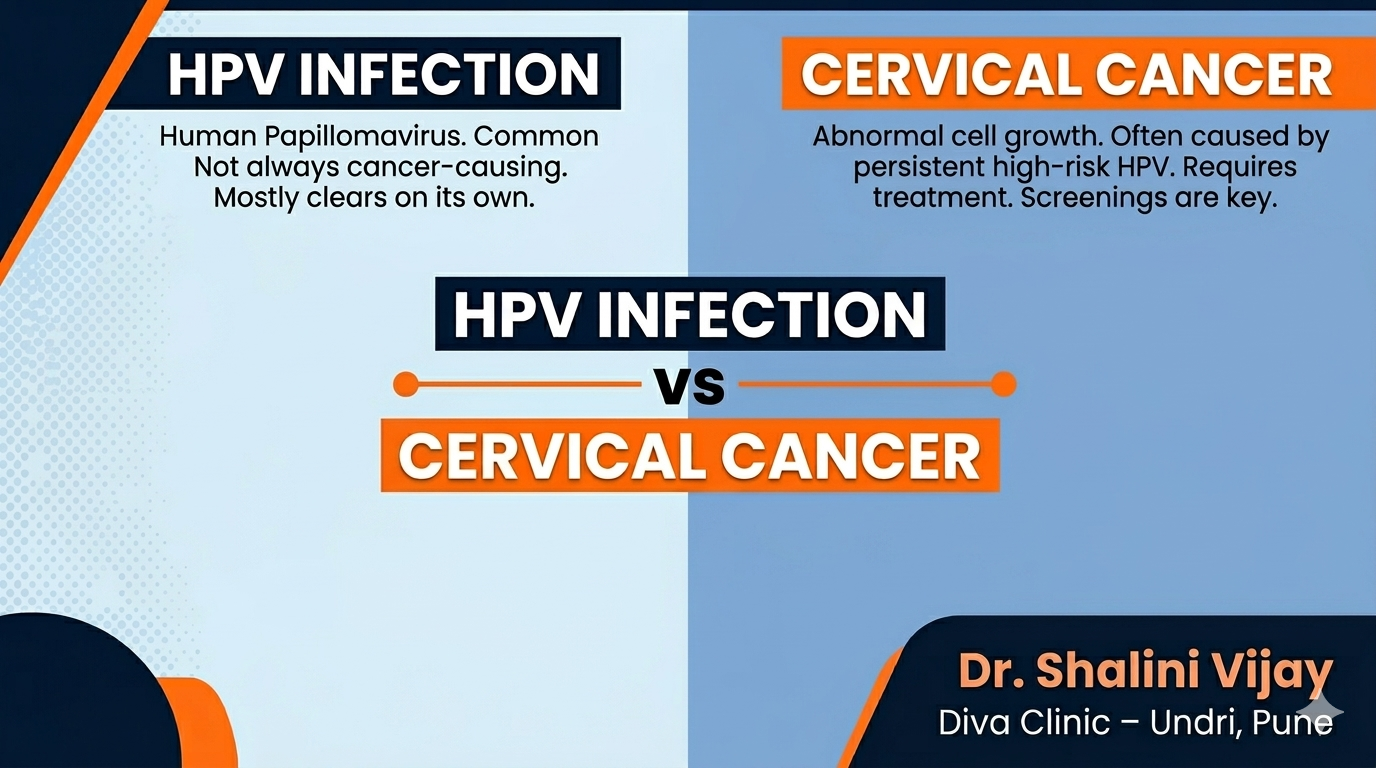
Many women hear about HPV and cervical cancer but are unsure how the two are related. It is common to assume that HPV infection automatically means cancer, but this is not true. Understanding the difference can help women make better decisions about their health.
Women in Undri and nearby areas of Pune can consult Dr. Shalini Vijay at Diva Clinic for screening, diagnosis, and preventive care related to cervical health.
What is HPV?
HPV stands for Human Papillomavirus. It is one of the most common viral infections transmitted through skin-to-skin contact, usually during sexual activity.
There are more than 100 types of HPV. Some types cause harmless skin warts, while others can infect the cervix and increase the risk of cervical cancer.
In fact, most sexually active individuals may get HPV at some point in their lives.
Does HPV Always Cause Cancer?
No, HPV infection does not automatically lead to cancer.
In most cases, the body’s immune system clears the infection naturally within one to two years. Many women may never even realize they had HPV.
However, certain high-risk strains of HPV can cause persistent infections. If these infections remain untreated for many years, they may cause abnormal changes in cervical cells that could eventually develop into cervical cancer.
How HPV Leads to Cervical Cancer
The process usually happens gradually:
- HPV infection occurs
- The virus infects cervical cells
- Some cells begin to change abnormally
- These abnormal cells develop into precancerous lesions
- Over time, they may progress to cervical cancer
This process can take 10 to 15 years, which is why regular screening is important.
Key Differences Between HPV and Cervical Cancer
| HPV Infection | Cervical Cancer |
|---|---|
| Viral infection | A disease where abnormal cervical cells grow uncontrollably |
| Very common | Relatively less common |
| Often clears naturally | Requires medical treatment |
| Usually no symptoms | May cause bleeding, pelvic pain, discharge |
Understanding this difference helps reduce unnecessary fear and encourages preventive screening.
Symptoms to Watch For
Most HPV infections do not cause symptoms. However, cervical cancer may eventually cause symptoms such as:
- Bleeding after intercourse
- Unusual vaginal discharge
- Pelvic pain
- Bleeding between periods
If these symptoms occur, women should consult a gynecologist immediately.
Importance of HPV Vaccination
HPV vaccination is one of the most effective ways to prevent cervical cancer.
The vaccine protects against high-risk HPV strains that cause most cervical cancer cases. It is recommended for adolescents and young adults before exposure to the virus.
Even vaccinated women should continue regular screening.
Screening and Diagnosis
Doctors use screening tests such as:
- Pap smear test
- HPV DNA test
- Colposcopy if abnormal cells are detected
These tests help identify infections and abnormal cervical cells early.
At Diva Clinic in Undri, Pune, Dr. Shalini Vijay offers cervical screening and guidance for HPV prevention.
Final Thoughts
HPV infection and cervical cancer are closely related but not the same. Most HPV infections resolve naturally, while cervical cancer develops only when abnormal cells remain untreated for a long time.
Regular gynecological checkups, HPV vaccination, and screening tests play a key role in protecting women’s health and preventing cervical cancer.